

The web is broken (and why it's turning into a feed).
Attention has already moved. Most websites are still showing up to the fight with a brochure from 2010 — here's why the feed wins, and what changes when you stop treating your homepage like a static destination.
BY CALLUM THOMAS →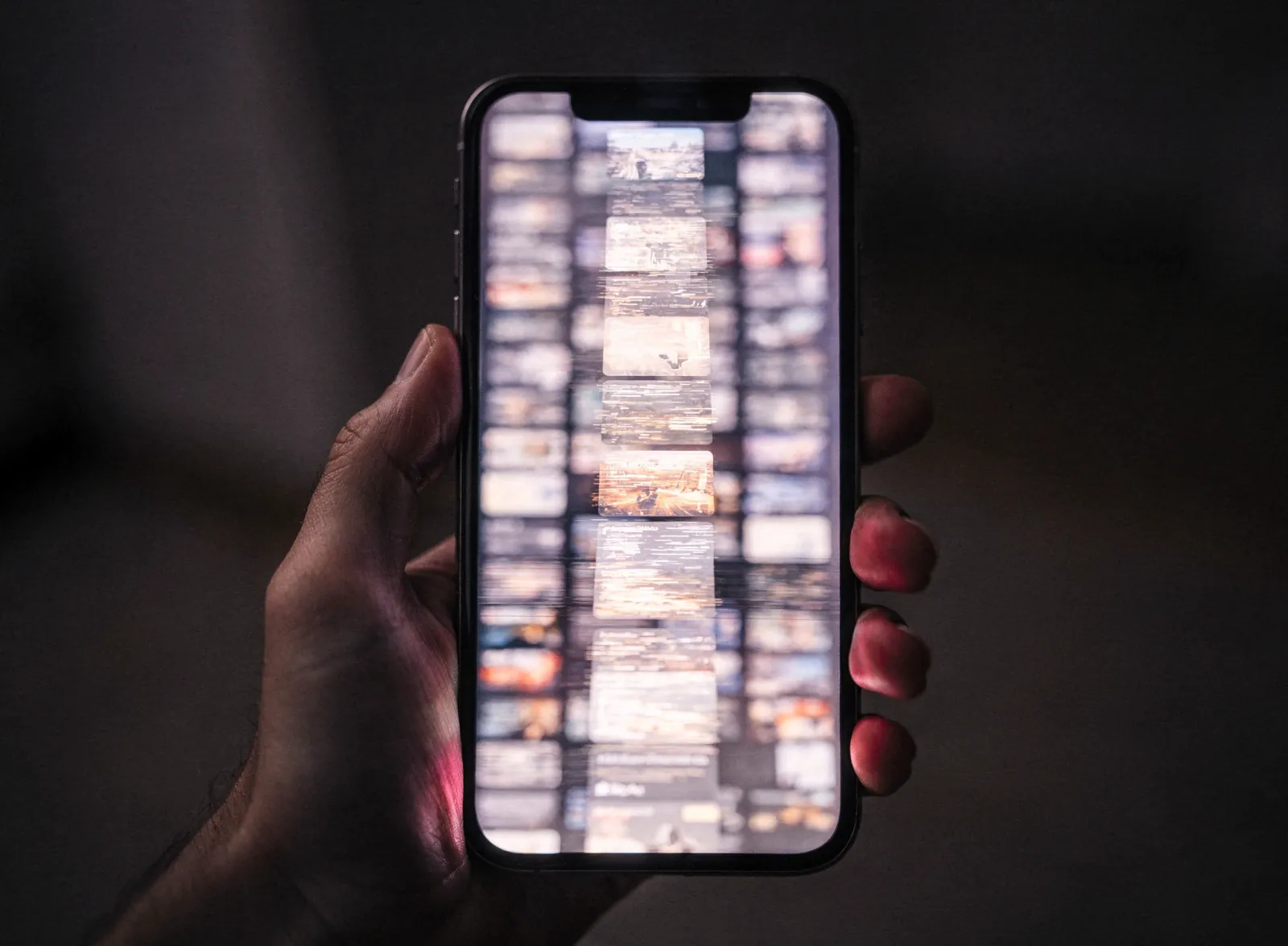
The battle for attention isn't something we're waiting for. It's already been decided, and most businesses are still showing up to the fight with a brochure from 2010.
If you look at where people spend most of their time, it's not on websites. It's in the feed. TikTok, Reels, Shorts — they didn't just capture attention; they fundamentally rewired how we expect to consume information. We've moved from a "search and navigate" culture to a "scroll and discover" culture.
Most websites are still built on the assumption that a user wants to read, click, and think. But that's not what they want to do. They want to be entertained, informed, and sold to — in that order — without ever having to leave their thumb-scrolling rhythm.
Why the "Feed" Wins (And Why Your Website is Struggling)
If you're honest about your own behaviour, you know why this is happening:
- The Friction Problem. Traditional websites force a user to work. Click this menu. Find the search bar. Read this paragraph. The feed removes all of that. It's a zero-friction environment where the platform does the heavy lifting for you.
- The Density Problem. A blog post might hold someone's attention for three minutes if you're lucky. In those same three minutes on a feed, a user has consumed a dozen different ideas. They aren't just getting more information; they're building a deeper, faster connection to the brand because they've seen 10 sides of it rather than one static page.
- The Logic vs. Impulse Gap. We spend thousands on SEO and UX design to make websites "logical." But humans rarely make decisions based on logic. We make them on impulse. The feed is designed to capture that impulse. Websites, by and large, are designed to kill it.
What Happens When You Build a "Feed" Website?
I've been thinking a lot about what happens when we stop treating our websites like digital brochures and start treating them like native discovery engines.
Imagine a homepage that doesn't have a navigation bar, but a full-screen, vertical feed. Imagine a user landing on your site and immediately "feeling" your brand through video rather than "reading" about it.
When you make that shift, three things change:
- Brand recall becomes automatic. If you're pushing distinct visual and audio codes through a scrollable feed, a user can experience your brand's personality ten times in sixty seconds. You just can't replicate that kind of frequency with a static layout.
- Conversion happens in the flow. Stop making people jump through hoops. If a video is good enough to capture their attention, the "buy" or "learn more" button should be right there, in the moment, without breaking the rhythm.
- Your website becomes a living thing. Right now, most companies treat their website as a "set it and forget it" project. If you move to a feed-based model, your site becomes a content engine. You aren't publishing two blog posts a month; you're iterating on 50 micro-videos. Your site becomes a library of experiments, not a static monument.
The "So What?" for Your Business
I know it sounds radical to tear down your navigation bar or pivot your entire content strategy toward vertical video. It feels risky. But the real risk is staying comfortable.
We are in the middle of a massive shift where "Search" is being replaced by "Discovery." If your website can't facilitate that discovery — if it still requires a user to sit still, read, and click — you're basically asking them to step back in time.
The question isn't whether your brand should adopt this. It's how long you can afford to hold onto the old way before the audience stops showing up entirely.
Attention has already moved. It's time we followed.
