
The creator economy is booming — it's time our websites caught up.
Brands lean into creators on TikTok and revert to controlled messaging the moment a visitor lands on their site. The disconnect between where attention lives and where brands convert matters more than most teams realize.
BY CALLUM THOMAS →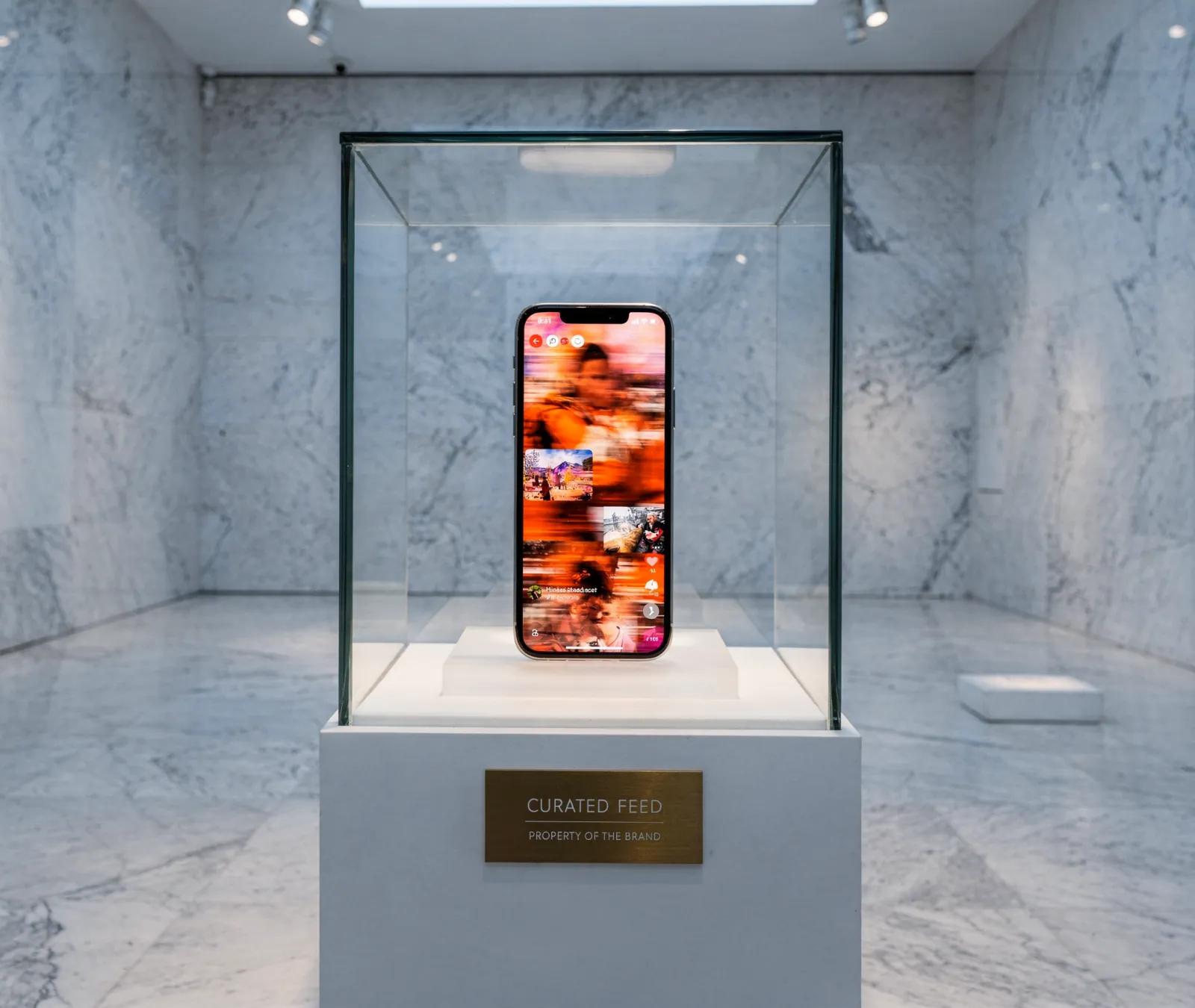
For the past few years, brands have been pouring time, budget, and energy into the creator economy. And for good reason. Platforms like TikTok, Instagram, and YouTube have proven that people connect far more with individuals than they do with institutions.
Scroll any feed and it's obvious: the most effective content doesn't look like advertising. It looks like someone sharing something they genuinely care about.
And yet, when you click through to most brand websites, it feels like stepping into a completely different era.
A Disconnect Between Where Attention Lives and Where Brands Convert
There's a growing gap between how brands attract attention and how they capture it.
On social platforms, brands lean into creators:
- Real people
- Real voices
- Real use cases
But on their websites, they revert to:
- Controlled messaging
- Static pages
- Carefully structured funnels
It's not that these websites are poorly built. In many cases, they're well-designed and functional. But they're missing something that modern audiences have come to expect — human presence.
That disconnect matters more than most brands realize.
Why Creator Content Works So Well
The success of the creator economy isn't accidental. It's rooted in how people make decisions.
We're far more likely to trust:
- Someone showing how they use a product
- Someone explaining something in their own words
- Someone who feels relatable
This is consistent with broader brand principles: trust and familiarity drive preference. In fact, human-led content — whether from employees, creators, or advocates — often generates significantly more reach and engagement than brand-owned channels alone.
Creators don't just present products. They contextualize them. They make them feel relevant.
Meanwhile, Websites Still Feel Like Brochures
Most websites are still built around a traditional model:
- Introduce the brand
- Explain the product
- Guide users through a funnel
That model made sense when attention was slower and more deliberate. But today, people are used to:
- Fast-moving content
- Continuous discovery
- Emotion-first engagement
In that context, a static website can feel… distant.
Not wrong — just out of sync.
What Happens When You Bring Creators Onto Your Website
This is where things start to get interesting.
When you integrate creator-led content into your website, a few things change immediately.
First, the experience becomes more dynamic. Instead of relying solely on polished brand messaging, the site begins to reflect real-world usage and perspective. It feels less like a presentation and more like an environment.
Second, trust builds faster. Seeing a product in action — especially through someone else's lens — often answers questions more effectively than a block of copy ever could.
And third, the volume of meaningful content increases. A single brand team can only produce so much. A network of creators, employees, or advocates can produce far more, and with greater variety.
This is where the idea of a content engine really comes into play: one idea can be expressed in dozens of different ways, across different voices and formats.
Younger Audiences Expect This Shift
If you're speaking to a younger audience, this isn't optional — it's expected.
People who have grown up on TikTok and Reels are used to:
- Scrolling, not clicking
- Watching, not reading
- Experiencing, not navigating
When they land on a traditional website, it can feel like friction. Not because the site is bad, but because it doesn't match how they're used to consuming information.
Meeting them where they are means more than just posting on social media. It means rethinking the role your website plays.
From Website to Content Platform
There's a subtle but important shift happening.
The most forward-thinking brands are starting to treat their websites less like static destinations and more like living platforms — places where content is continuously updated, not occasionally refreshed.
In practice, that might look like:
- Creator videos embedded directly into key pages
- Product experiences built around real-world use cases
- Ongoing contributions from employees or community members
Formats like Webstory-style experiences — visual, tap-through, mobile-first — are part of this evolution. They reflect how people already consume content, rather than asking them to adjust.
Letting Go (Just a Little)
For many brands, the biggest challenge here isn't technical — it's cultural.
It requires a shift from:
- Control → contribution
- Perfection → authenticity
- Messaging → storytelling
Letting creators, employees, or even customers have a visible role on your website can feel risky. But it's often that very shift that makes the experience feel more real — and more engaging.
A Simple Test
There's a straightforward way to know if this is something you need to address.
Compare how your brand feels on social platforms versus your website.
If your TikTok or Instagram presence feels:
- Lively
- Engaging
- Human
…but your website feels:
- Static
- Formal
- Distant
Then there's a gap worth closing.
Closing Thought
The creator economy isn't just changing how we market — it's changing what people expect from digital experiences altogether.
Websites don't need to become social platforms. But they do need to evolve.
Because increasingly, people don't just want to hear from brands.
They want to see how those brands live, through the people who use, represent, and believe in them.
And the brands that figure out how to bring that energy onto their own platforms will have a meaningful advantage in the years ahead.
