

Rethinking the first 10 minutes: why Webstory might be the best onboarding tool brands aren't using.
There's a moment most product teams don't think enough about — the ten minutes after someone unboxes the thing. Short clips, clear steps, no friction. A walkthrough of what changes when onboarding stops looking like a manual.
BY CALLUM THOMAS →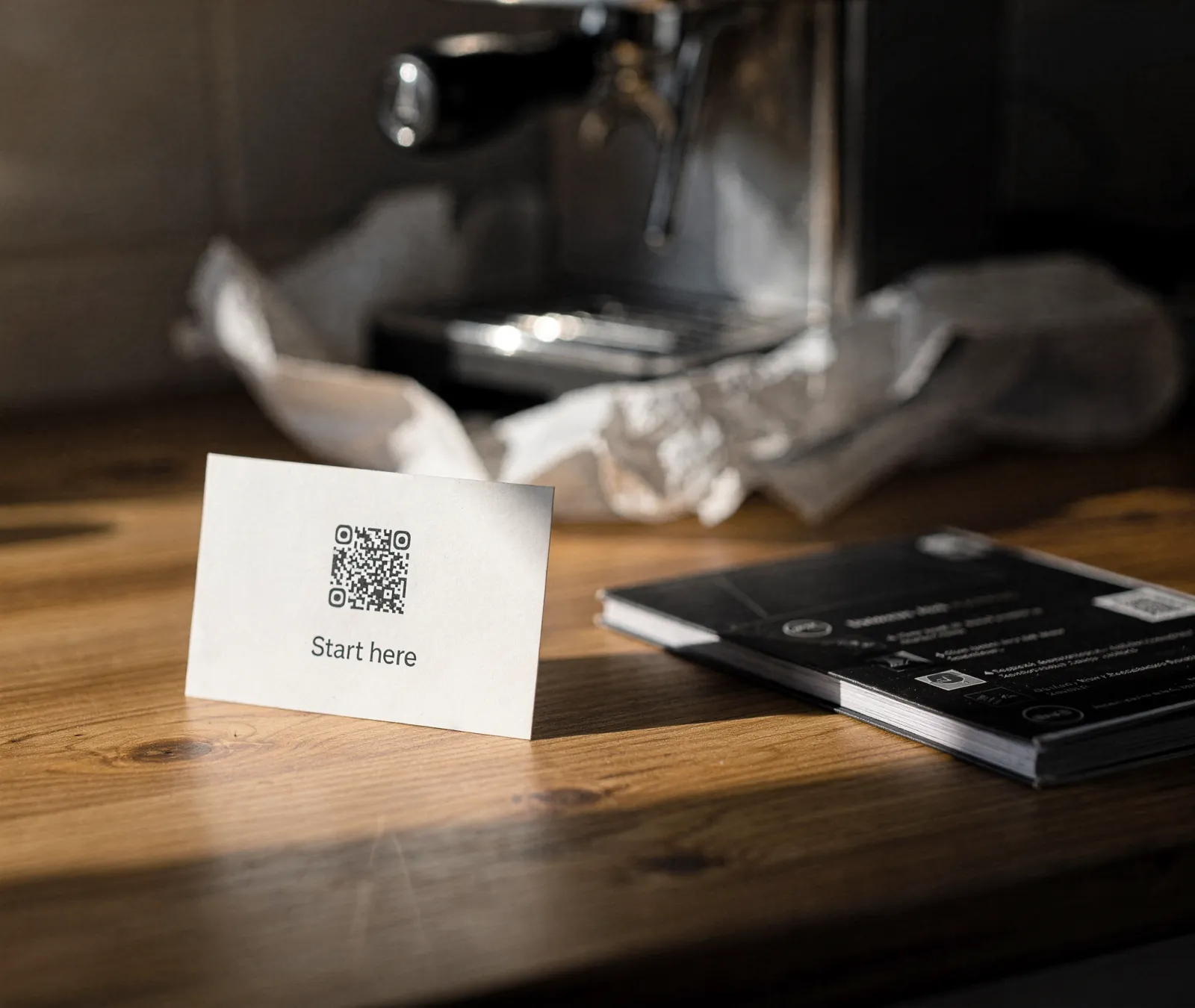
There's a small moment most product companies don't spend enough time thinking about.
It happens right after the box is opened.
Not the marketing. Not the purchase decision. Not even the delivery.
Just that first interaction — when someone takes the product out, looks at it, and tries to figure out what to do next.
For something simple, it's intuitive. For anything slightly more complex, it usually isn't.
The Reality of Product Onboarding Today
Think about the last time you bought something like a coffee machine.
You open the box and find:
- A thick instruction booklet
- Multiple languages crammed into the same pages
- Small diagrams that require a bit of interpretation
Or maybe there's a QR code that takes you to a 30min video on YouTube.
Or if you're fancy … a heavy app they need to download, add rendering files and create an account … no one wants that.
Technically, everything you need is there.
But in that moment, standing in your kitchen, that's not really what you're looking for.
You're not trying to learn everything.
You're just trying to get started without messing it up.
A Slightly Different Approach
Now imagine the same scenario, but handled a little differently.
Inside the box, there's a simple card:
"Congratulations on your new machine.
Scan here, and we'll walk you through it."
You scan the code.
Instead of landing on a long video or a support page, you're dropped into something that feels familiar — closer to the way you'd scroll through TikTok or tap through stories on Instagram.
Short clips. Clear steps. No friction.
Learning by Moving Forward, Not Searching Around
The first clip shows you how to unbox everything properly. It's quick — just enough to orient you.
You move to the next one:
- Where each component goes
- What to plug in
- What to check before turning it on
Then another:
- How to run the first cycle
- What settings actually matter
And eventually:
- How to get a better result
- How to adjust things to your preference
- Maybe even how to steam milk without turning your kitchen into chaos
There's no need to scrub through a timeline or flip back through pages. You just move forward, step by step.
Why This Feels Better (Even If the Information Is the Same)
What's interesting is that nothing fundamentally new is being introduced here. The same instructions exist in the manual or the long-form video.
But the experience is different.
It's paced.
It respects the moment you're in — slightly distracted, mildly impatient, but still interested.
And it removes a subtle kind of friction: the need to figure out how to learn before you can actually begin.
From Instructions to Guidance
Most onboarding materials are designed to be comprehensive. They aim to cover every scenario, every edge case.
That's useful — but it's not always what someone needs right away.
A Webstory-style approach shifts the emphasis slightly. Instead of trying to explain everything up front, it focuses on guiding someone through the first few steps clearly.
And once those first steps feel easy, everything else tends to follow more naturally.
It Changes How the Product Feels
This kind of experience does something beyond just helping people set things up.
It shapes perception.
A product that's easy to get started with feels:
- Better designed
- More thoughtful
- More considered
Even if the product itself hasn't changed.
That first interaction carries weight. It sets the tone for everything that comes after.
There's Room to Go Further
What's particularly interesting is that this doesn't have to stop at setup.
Once someone is comfortable, the same format can introduce:
- Advanced techniques
- Pro tips for improvements
- Add-on purchases
In the case of a coffee machine, that might mean learning how to adjust grind size properly, or how to texture milk like a pro barista.
It becomes less about onboarding and more about ongoing familiarity.
A Small Shift That Feels Bigger Than It Is
None of this requires reinventing the product.
It's really just a change in how the experience is delivered.
Instead of:
- Long-form explanations
- Static instructions
You're offering:
- Short, guided steps
- Delivered at the right moment
It's a subtle shift, but one that tends to make a disproportionate difference.
Closing Thought
That first interaction after unboxing is one of the few times a customer is fully engaged.
They're paying attention.
They're curious.
They want it to go well.
Meeting that moment with something simple, clear, and well-paced isn't just a usability improvement.
It's a way of showing that the brand has thought about the experience all the way through — not just up to the point of purchase, but beyond it.
And increasingly, that's what people notice.
